Imagine handing your client a remote, pressing play, and watching them walk through a building that hasn’t been built yet. That’s the power of 3D walkthrough animation services — and in 2026, they’ve become one of the most decisive tools in an architect’s and developer’s arsenal.
The global market for architectural animation is accelerating rapidly, with research tracking 3D walkthroughs as a distinct, high-growth technology segment projected through 2030. Yet most architecture firms still rely on static renders alone, leaving a significant competitive gap for those who adopt animation early.
This guide covers everything you need — what these services deliver, what they cost in India, how the production process works, and how to choose the right vendor for your next project.
TL;DR / Quick Answer
3D walkthrough animation services transform architectural designs into cinematic, navigable video experiences that help architects win client approvals and developers accelerate pre-sales. In India, pricing typically ranges from ₹5,000 to ₹5,500+ per second of animation, with production timelines of one to four weeks depending on complexity. The right vendor should offer photorealistic quality, RERA-compliant deliverables, and transparent revision policies.
Table of Contents
- What Are 3D Walkthrough Animation Services?
- Benefits for Indian Real Estate & Architecture
- India Pricing Guide 2026
- The 7-Step Production Process
- Software, Technology & Key Deliverables
- How to Choose the Right Vendor in India
- RERA Compliance & Legal Considerations
- Top Use Cases & Expert Cost-Saving Tips
- Frequently Asked Questions
What Are 3D Walkthrough Animation Services?
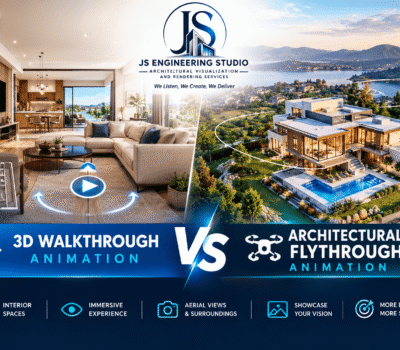
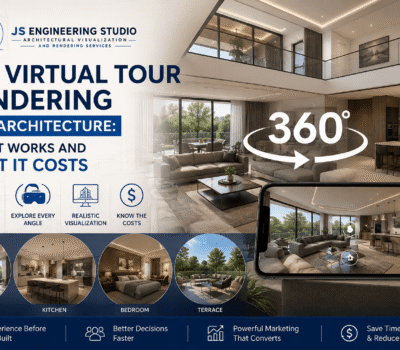
A 3D walkthrough animation is a photorealistic video that simulates a viewer moving through an architectural space — interior rooms, exterior facades, landscapes, and communal areas — before a single brick is laid. Unlike a static rendering that captures one fixed angle, a walkthrough uses a carefully designed camera path to reveal spatial flow, material finishes, lighting conditions, and atmosphere in motion. Studios convert your CAD drawings, BIM models, or SketchUp files into cinematic visualizations, with final outputs ranging from a 30-second lobby flythrough to a full five-minute property tour. Providers of 3D Animation Walkthrough Services deliver these as polished video files ready for sales presentations, investor decks, and digital marketing campaigns.
The distinction between a walkthrough and other visualizations matters. A static render communicates design intent at a single moment; a 360-degree panorama lets viewers look around a fixed point. A walkthrough creates a narrative — it guides the viewer through a sequence of spaces, building emotional connection and spatial understanding that flat images cannot match. According to the Chaos and Architizer 2025 State of Architectural Visualization report, only 26% of architecture firms use animation frequently, even as client expectations for motion-based presentations continue to rise. That gap represents a clear competitive advantage for firms adopting walkthrough services now.
Benefits for Indian Real Estate & Architecture
For Indian architects and developers, 3D walkthrough animation services solve a problem that static materials cannot: making unbuilt properties emotionally tangible to buyers comparing dozens of projects online. The most immediate benefit is faster pre-sales. A Dubai Marina developer recently replaced a planned USD 2.3 million physical show home with a USD 180,000 suite of 3D walkthrough animations — and sold 68% of units within 90 days before construction began, with 71% of buyers purchasing remotely. Enquiry-to-deposit time dropped from approximately 34 days to 12 days. While results vary by market, this case illustrates how walkthroughs support marketing and sales efforts far beyond what brochures achieve.
In India’s competitive metros like Mumbai, Bangalore, Hyderabad, and Pune, developers increasingly use walkthroughs for RERA website uploads, YouTube campaigns, WhatsApp sales funnels, and listings on portals like MagicBricks and 99acres. Vernacular voiceovers in Hindi, Tamil, and Telugu extend reach to tier-2 and tier-3 buyer segments. For architects, walkthroughs strengthen presentations and accelerate design approvals. Instead of explaining spatial sequences verbally, you play a two-minute video that makes the design self-explanatory. Firms offering 3D architectural visualization services find that clients make faster decisions and request fewer revisions when they can see finished spaces in motion — reducing costly change orders during construction.
India Pricing Guide 2026
Pricing for 3D walkthrough animation services in India varies by studio tier, city, project complexity, and output quality. Most professional studios use quote-based pricing, but published guideline ranges help you benchmark expectations. Established studios list guideline pricing starting at approximately USD $60–$65 per second of animation, translating to roughly ₹5,000–₹5,500 per second. A one-minute walkthrough starts around ₹3.0–₹3.3 lakh, while a three-minute property tour can range from ₹9 lakh upward depending on scope, photorealism level, and deliverable formats included.
Several factors push pricing higher or lower. Duration is the primary driver — longer animations cost more, though per-second rates may decrease at scale. Photorealism level matters significantly: a clay-model walkthrough costs considerably less than a fully textured, lit, and landscaped version. Camera path complexity also affects cost — a straight-line corridor walk is cheaper than a sweeping aerial-to-interior flythrough. Additional variables include sound design and voiceover, rush delivery fees, revision rounds (typically two to three are standard), and whether source files are clean CAD/BIM models or require scratch modeling. Studios in tier-1 cities like Mumbai and Gurgaon may charge 15–25% more than tier-2 counterparts in Ahmedabad or Indore, though quality consistency varies. The key is requesting itemized quotes that break down per-second rates, revision inclusions, and deliverable formats before committing.
The 7-Step Production Process
Understanding how 3D walkthrough animation services are produced helps you provide better inputs and evaluate vendor quality. A professional studio follows a structured seven-step workflow.
Step 1: Project Brief & Storyboard — the process begins with your architectural drawings, a design brief, and a discussion of camera path, mood, and audience. The studio creates a storyboard showing the proposed route.
Step 2: 3D Modeling — using your CAD, Revit, or SketchUp files, the team builds accurate geometry including walls, floors, ceilings, and structural elements. Studios providing comprehensive 3D visualization services handle this in-house using 3ds Max and AutoCAD.
Step 3: Texturing & Lighting — realistic materials like marble, wood, and glass are applied, and scenes are lit to match the desired atmosphere.
Step 4: Scene Assembly — exterior environments, vegetation, vehicles, and people are added for context.
Step 5: Camera Path & Motion Design — the camera route is refined for cinematic pacing with smooth movements and strategic pauses at key design features.
Step 6: Rendering — each frame is rendered at 4K resolution, which can take
several hours per minute of footage depending on scene complexity, lighting and the render setup used. Studios usually split this across multiple machines so a long walkthrough does not stall the schedule.
Step 7: Post-Production & Delivery — frames are compiled, colour graded and cut together with music, ambient sound, titles and your logo. You get a review cut, a short revision window, and then the final files in the formats you need.
Most projects run two to three revision rounds. Anything beyond that is normally priced separately, so confirm the number of rounds in writing before you start.
Software, Technology & Key Deliverables
Most professional studios work with a familiar stack: 3ds Max with V-Ray or Corona for photoreal output, Lumion or Twinmotion for faster turnaround, Revit or SketchUp for geometry, and After Effects or DaVinci Resolve for post-production. Real-time engines such as Unreal Engine are used when a client wants an interactive or VR-ready experience.
The tool matters less than the result, but it affects speed and look. Ask which engine the studio will use for your project and why. A good studio can explain the trade-off between a quick Lumion pass and a slower, more controlled V-Ray render.
What you should receive
- 4K MP4 master for presentations, sales galleries and events.
- Web-optimised cut sized for your website, YouTube and property portals.
- Vertical social cuts (9:16) for Instagram Reels and YouTube Shorts.
- Still frames pulled from the animation for brochures and hoardings.
- VR-ready or interactive output when it is part of the brief.
If you also need stills, floor plans or product visuals, a studio that offers 3D architectural visualization services and 3D animation services under one roof keeps style and lighting consistent across everything you publish.
How to Choose the Right 3D Walkthrough Vendor in India
Price is only one factor. A cheap quote that needs five rounds of fixes costs more than a fair quote that gets it right the first time. Use this checklist when you compare studios.
- Portfolio fit. Look for projects similar to yours: residential towers, villas, commercial interiors, townships. Check lighting, materials and camera movement, not only the thumbnails.
- Clear scope. The quote should state duration, resolution, number of camera paths, sound, revision rounds and delivery formats.
- Process and timeline. Ask for a milestone plan with approval points after storyboard, modelling and the first render preview.
- Source files and usage rights. Confirm who owns the final video, whether raw renders are included, and any limits on where you can publish it.
- Communication. Look for a single point of contact, quick replies and a shared folder for review comments.
- Experience and references. A studio with a long track record, such as JS Engineering Studio, which has worked with clients across several countries, can share past work and talk you through its process.
- Payment terms and GST. Get the milestone split and GST invoicing details in writing.
Treat a studio’s turnaround promise with care. A realistic delivery date depends on project size, how quickly you send feedback, and how many revisions you ask for.
RERA Compliance & Legal Considerations
If you are marketing a registered project in India, your walkthrough is part of your advertising. It should not show amenities, areas or layouts that differ from the approved plans. Keep the RERA registration number and the required disclaimers visible wherever the rules ask for them.
- Match the animation to the sanctioned plan, including unit layout, carpet area and common amenities.
- Label artistic impressions clearly so buyers know the video is a visual aid.
- Put the RERA registration number on the video end card and in the description of any platform where you publish it.
- Do not use the walkthrough as a substitute for any disclosure you must make on your own marketing channels.
A walkthrough supports your marketing. It is not a regulatory certificate and does not speed up an approval. Check current state RERA rules for your project, or ask your legal adviser, before you publish.
Top Use Cases for 3D Walkthrough Animation
- Residential projects: show a flat, a tower or a full township before it is built.
- Commercial and office spaces: help tenants picture layouts and amenities.
- Hospitality: present rooms, lobbies and restaurants to investors and guests.
- Healthcare and education: explain complex campuses to boards and stakeholders.
- Industrial facilities: plan workflows and walk teams through a new plant.
- Interior design pitches: let homeowners see finishes and lighting before they approve.
- Retail and malls: test circulation and storefront visibility early.
Cost-Saving Tips for Indian Developers & Architects
- Freeze the design first. Changes after modelling are the biggest cause of extra cost.
- Share clean CAD or BIM files and reference images up front so the studio does not have to guess.
- Pick the right length. A tight 60 to 90 second film often does more than a long one nobody finishes.
- Combine deliverables. Order the main film, stills and vertical cuts in one project rather than separately.
- Consolidate feedback. Send one set of comments per round instead of many small ones.
- Plan the schedule. Rush delivery usually carries a premium, so give the studio enough time.
Frequently Asked Questions
How long does a 3D walkthrough animation take?
Many projects take from one to four weeks. Larger projects, more camera paths and slow feedback add time.
How many revisions are included?
Two to three rounds is common. Ask what counts as a revision and what extra rounds cost.
What files do I need to share?
Floor plans, elevations and sections in CAD, plus any Revit or SketchUp models, material choices and reference images.
Does a walkthrough replace a site visit?
No. It supports the sales process and helps people understand the design, but buyers will still want to see the real site.
Who owns the final video?
Ownership and usage rights are set by your agreement. Confirm them before you sign.
Will GST apply?
Studios in India normally charge GST on their invoices. Ask for the details in the quote.
Conclusion
3D walkthrough animation gives architects and developers a clear way to show a design before it exists. Define your goal and scope, compare studios on portfolio, process and terms, and keep your RERA and legal obligations in view. To talk through a project, see the 3D animation walkthrough services from JS Engineering Studio or get in touch through the main site.