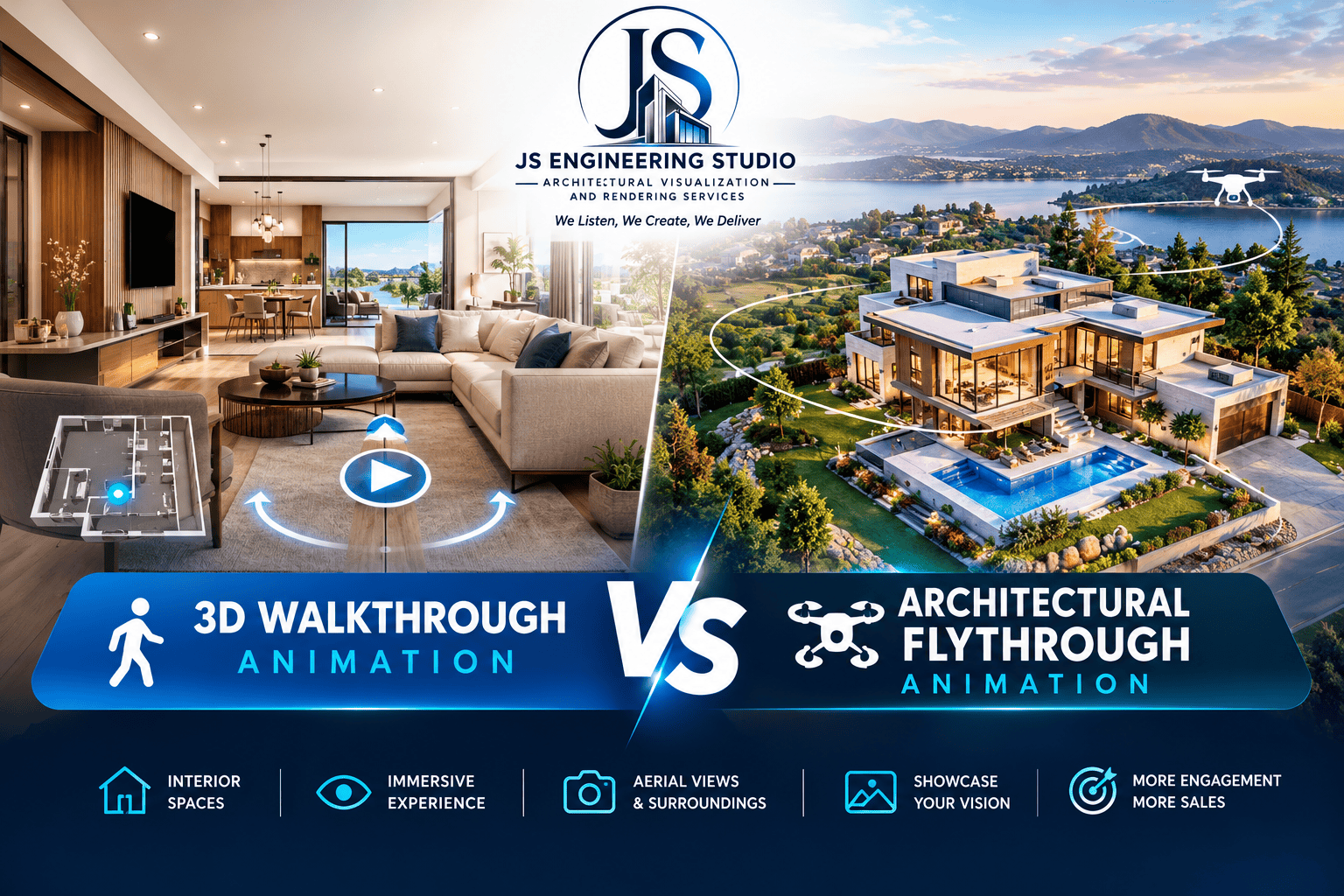
3D Walkthrough Animation or Architectural Flythrough? Choose the Right Option – JS Engineering Studio
When presenting a new architectural project, static images can only show so much. Clients, buyers, architects, and developers often want to understand how a building looks and feels before construction begins. This is where animation becomes a powerful visualization tool.
Two popular options are 3D walkthrough animation and architectural flythrough animation. Although both use 3D technology to present architectural spaces, they serve different purposes and create very different viewing experiences.
Understanding the difference can help architects, real estate developers, builders, and designers choose the right animation for their project.
What Is a 3D Walkthrough Animation?
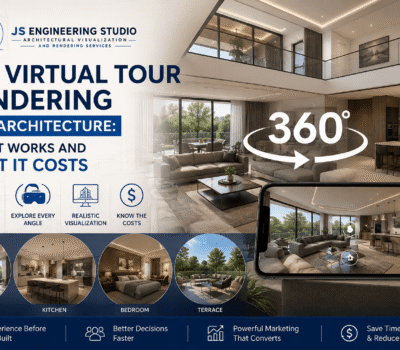
A 3D walkthrough animation is designed to make viewers feel as though they are physically moving through a building or property.
The camera generally follows a human-level perspective, entering rooms, moving through hallways, exploring living areas, and transitioning between spaces. This approach is particularly useful for residential interiors, commercial buildings, hotels, apartments, and office projects.
For example, a residential walkthrough might begin at the entrance, move through the foyer, enter the living room, explore the kitchen, and continue toward bedrooms and outdoor spaces.
The biggest advantage is the sense of scale and movement. Viewers can understand how rooms connect and get a better impression of the property’s layout.
What Is an Architectural Flythrough Animation?
An architectural flythrough animation focuses more on presenting the building as a complete architectural design.
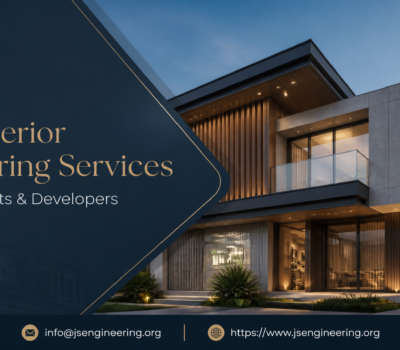
Instead of staying primarily at eye level, the camera can move around the exterior, rise above the property, approach the building from different angles, and reveal the surrounding landscape.
Flythroughs are often used for:
- Residential developments
- Commercial buildings
- Apartment communities
- Master-planned developments
- Hotels and resorts
- Educational campuses
- Large architectural projects
- Real estate marketing
An architectural flythrough can combine aerial views, exterior camera movements, landscaping, roads, surrounding buildings, and environmental elements to create a cinematic presentation.
3D Walkthrough Animation vs. Architectural Flythrough Animation: Key Differences
The main difference comes down to how the viewer experiences the architecture.
A 3D walkthrough animation usually puts the viewer inside the building. The camera travels through interior spaces and presents the project from a human perspective.
An architectural flythrough animation generally provides a broader view. The camera can move around the exterior, travel above the building, reveal the site, and showcase the relationship between the architecture and its surroundings.
| Feature | 3D Walkthrough Animation | Architectural Flythrough Animation |
|---|---|---|
| Main focus | Interior and spatial experience | Overall architectural presentation |
| Camera perspective | Human/eye-level | Exterior, aerial and cinematic |
| Best for | Homes, interiors, offices | Developments and large projects |
| Interior details | Strong focus | Optional |
| Exterior presentation | Moderate | Strong |
| Site context | Limited to moderate | Excellent |
| Marketing impact | High | High |
| Viewer experience | Feels like walking through | Feels like exploring the project |
Which Animation Should You Choose?
Choosing between the two depends on what you want your audience to see.
If the primary goal is to showcase interior design and spatial planning, a walkthrough is usually the better choice. It allows potential buyers or clients to understand room sizes, circulation, furniture arrangements, lighting, materials, and finishes.
If the goal is to showcase the entire property and its architectural surroundings, a flythrough can be more effective. It provides greater freedom to show the building from multiple exterior angles.
For large developments, combining both approaches can create an even stronger marketing presentation.
Benefits of 3D Walkthrough Animation
A professional walkthrough can help clients visualize an unbuilt property before construction starts.
Some important benefits include:
- Better understanding of floor plans
- Realistic presentation of interior spaces
- Improved client communication
- Stronger property marketing
- Better understanding of materials and finishes
- Emotional connection with potential buyers
- Effective presentations for investors and stakeholders
For real estate professionals, this type of animation can transform technical architectural information into an experience that ordinary buyers can easily understand.
Benefits of Architectural Flythrough Animation
An architectural flythrough is particularly valuable when the surrounding environment is an important part of the project.
It can showcase:
- Building exteriors
- Landscaping
- Roads and pathways
- Swimming pools
- Parking areas
- Outdoor amenities
- Neighboring buildings
- Master plans
- Day and night environments
The cinematic movement of the camera can also make the final presentation more engaging for websites, social media, sales presentations, and property launch campaigns.
How JS Engineering Studio Creates Architectural Animations
At JS Engineering Studio, architectural animation is developed around the project’s design, target audience, and marketing objectives.
The process can begin with architectural drawings, CAD files, PDFs, SketchUp models, reference images, or other available project information. The 3D environment is then developed with appropriate materials, lighting, landscaping, furniture, and surrounding elements.
Camera movements are planned according to the story the animation needs to tell. Interior projects may require smooth room-to-room transitions, while large developments may benefit from aerial movements and cinematic exterior shots.
Rendering technologies such as 3ds Max, V-Ray, Corona Renderer, Unreal Engine, D5 Render, and Chaos Vantage can be used depending on the project’s requirements.
The objective is not simply to create attractive visuals. The animation should communicate the architectural concept clearly and help the audience understand the proposed space.
3D Animation for Real Estate Marketing
For developers and real estate professionals, animation can be a valuable pre-construction marketing tool.
A property does not need to exist physically for potential buyers to experience it visually. High-quality animation can demonstrate the future appearance of a residence, apartment community, commercial property, or master-planned development.
This can be especially useful when launching a project before construction is complete.
A well-produced 3D Walkthrough Animation vs. Architectural Flythrough Animation presentation can also be adapted for websites, property presentations, digital advertising, social media, and sales centers.
Final Thoughts:
Both animation styles have an important place in architectural visualization.
A 3D walkthrough animation is ideal when you want viewers to experience the interior of a building from a human perspective. An architectural flythrough is better suited to projects where exterior architecture, site planning, landscaping, and the surrounding environment need to be showcased.
The right choice ultimately depends on your project goals, audience, and marketing strategy.
For complex projects, using both approaches can provide a complete visual story—from the overall site and exterior architecture to the smallest interior details.
JS Engineering Studio provides professional architectural visualization and animation services for architects, builders, developers, interior designers, and real estate professionals. With the right combination of modeling, materials, lighting, camera movement, and rendering, an architectural concept can become a compelling visual experience long before construction begins. Contact us here for 3D Rendering and Animation Services now!? Reach us out with DM here on: | Get in touch email us at info@jsengineering.org
Frequently Asked Questions:
1. What is the difference between a 3D walkthrough and a flythrough?
A 3D walkthrough typically takes the viewer through interior spaces at a human-level perspective. A flythrough generally uses exterior, aerial, and cinematic camera movements to present the architecture and surrounding site.
2. Is a 3D walkthrough better for residential projects?
Yes. A walkthrough is particularly effective for showing homes, apartments, interiors, and other spaces where room layouts and the interior experience are important.
3. When should I use an architectural flythrough?
An architectural flythrough works well for developments, commercial buildings, resorts, campuses, master plans, and projects where exterior architecture and site context are important.
4. Can a project use both animation styles?
Absolutely. Combining an interior walkthrough with an exterior flythrough can provide viewers with a complete understanding of the project.
5. Can animation be created before construction?
Yes. Architectural animation is specifically useful for unbuilt projects because the entire environment can be created digitally from architectural drawings and 3D models.
6. How can architectural animation help real estate marketing?
Animation allows buyers to experience a proposed property before it exists. It can be used in presentations, websites, social media campaigns, advertisements, and sales materials.
7. What information is needed to create an architectural animation?
Depending on the project, useful inputs can include CAD drawings, floor plans, elevations, sections, SketchUp or other 3D models, material references, landscape plans, site photographs, and design references.