

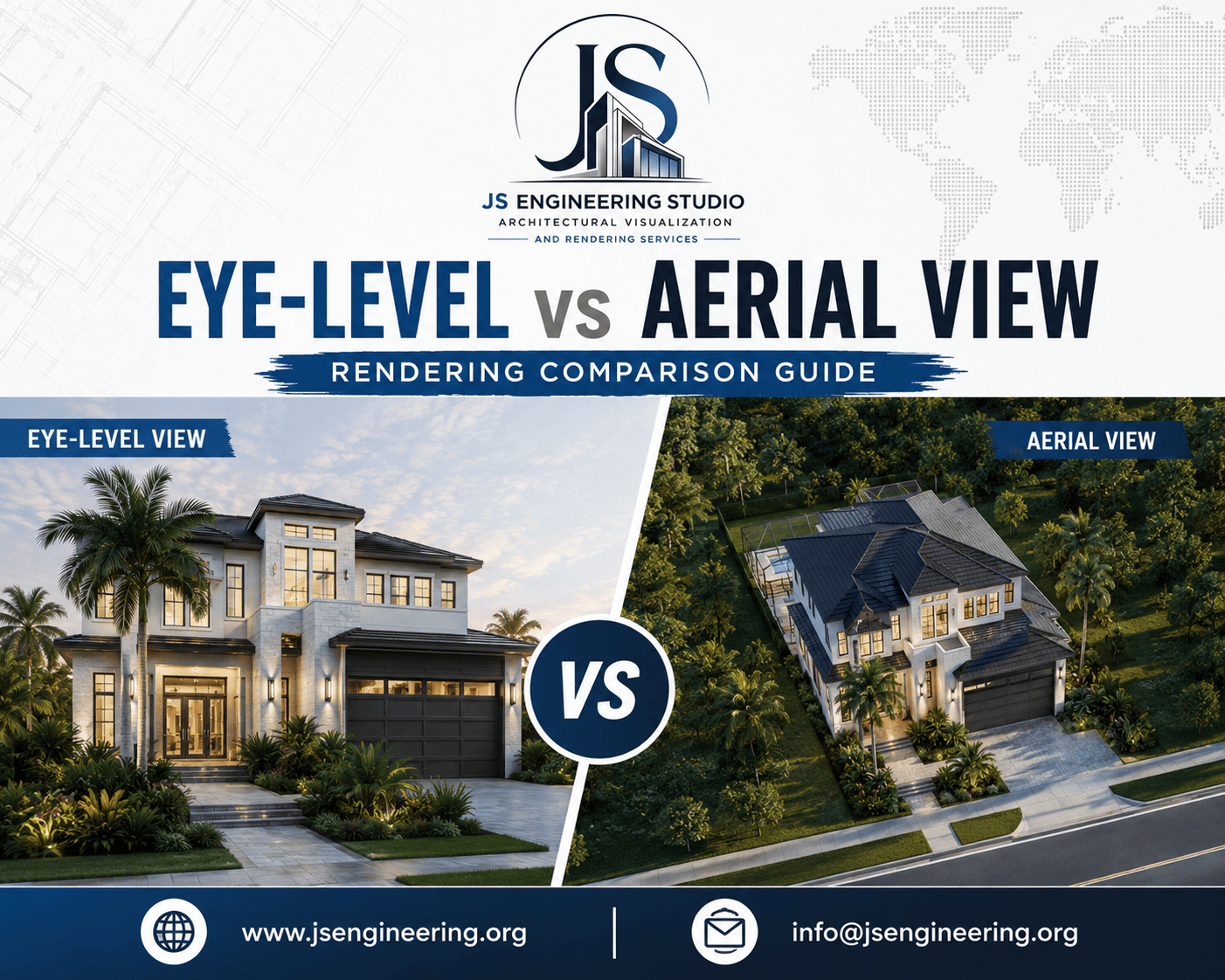
Eye-Level vs Aerial View Rendering Comparison Guide – JS Engineering Studio
In architectural visualization and real estate marketing, choosing the right perspective can significantly impact how a property is perceived. The debate between eye-level vs aerial view rendering is common among designers, developers, and marketers who want to create high-converting visuals.
At JS Engineering Studio, we help clients choose the most effective rendering perspectives to enhance property appeal and drive better engagement. In this guide, we’ll explore the difference between eye-level and aerial view rendering, their benefits, and how to choose the right one for your project.
What is Eye-Level Rendering?
Eye-level rendering represents a view from a human perspective, typically around 5–6 feet above the ground. This angle closely mimics how a person would naturally experience a property.
Benefits of Eye-Level Rendering
- Creates a realistic and relatable view
- Builds emotional connection with buyers
- Ideal for residential and street-level marketing
- Highlights design details like entrances and materials
For real estate listings, eye-level rendering vs aerial rendering often favors eye-level views when the goal is to create a personal connection.
What is Aerial View Rendering?
Aerial view rendering, also known as bird’s-eye view, shows the property from above. It provides a broader perspective of the entire layout and surroundings.
Advantages of Aerial View Rendering
- Showcases property size and layout
- Highlights landscaping and nearby amenities
- Ideal for large developments and commercial projects
- Adds a premium, cinematic feel
When comparing aerial view vs eye level rendering comparison, aerial views are highly effective for showcasing scale and context.
Eye-Level vs Aerial View Rendering: Key Differences
Understanding the difference between eye-level and aerial view rendering helps in selecting the right approach for your project.
| Feature | Eye-Level Rendering | Aerial View Rendering |
|---|---|---|
| Perspective | Human eye height | Top-down / elevated |
| Purpose | Emotional connection | Showcase layout & scale |
| Best For | Homes, small properties | Large properties, developments |
| Realism | Highly realistic | More conceptual |
| Marketing Use | Listings, brochures | Master plans, ads |
This eye-level vs aerial view rendering comparison clearly shows that both have unique strengths.
Related post : photorealistic building exterior rendering angles
When to Use Eye-Level vs Aerial Rendering
Choosing when to use eye-level vs aerial rendering depends on your goals:
Use Eye-Level Rendering When:
- You want to create a lifestyle-focused presentation
- The project is residential
- You want buyers to imagine living in the space
Use Aerial View Rendering When:
- You need to show property layout or master planning
- The project involves large land areas
- You want a premium marketing perspective
At JS Engineering Studio, we often recommend combining both for maximum impact.
Which Rendering Angle is Better for Real Estate Marketing?
A common question is: which rendering angle is better for real estate marketing?
The answer depends on your strategy:
- Use eye-level rendering for emotional appeal and trust
- Use aerial rendering for information and scale
The most effective campaigns use both to create a complete visual story. This approach enhances visual storytelling with rendering perspectives and improves conversion rates.
Related post : Best Angles for Real Estate Rendering
Eye-Level vs Aerial Rendering for Architectural Visualization
In eye-level vs aerial rendering for architectural visualization, each serves a distinct purpose:
- Eye-level focuses on experience and realism
- Aerial focuses on planning and overview
Combining both perspectives ensures a balanced presentation that appeals to both emotional and logical decision-making.
How to Choose Between Aerial and Eye-Level Rendering
If you’re unsure how to choose between aerial and eye-level rendering, follow these steps:
- Identify your target audience
- Define the purpose (marketing vs planning)
- Highlight key property features
- Use multiple perspectives for better storytelling
This strategy ensures optimal rendering viewpoints for real estate marketing.
Real-World Application by JS Engineering Studio
At JS Engineering Studio, we’ve seen that projects using both perspectives perform significantly better. For example:
- Eye-level renders increase engagement on property listings
- Aerial views improve understanding of layout and surroundings
By combining these approaches, we create real estate visualization techniques that truly convert.
Request a free Quote on your Architectural Visualization solutions. Contact us ! and email us at info@jsengineering.org.
FAQs
❓ Which is better: eye-level or aerial rendering?
Honestly, neither is “better” in every case. Eye-level works great for emotional connection, while aerial views are perfect for showing the full picture. It depends on what you want to highlight.
❓ Do I need both eye-level and aerial renders?
In most cases, yes. Using both gives buyers a complete understanding of the property and increases trust.
❓ Is aerial rendering only for large properties?
Mostly, yes—but even smaller properties can benefit from aerial views if surroundings or location are important.
❓ Does eye-level rendering help sell properties faster?
Yes, because it feels more realistic and helps buyers imagine themselves living there.
❓ How many render angles should I use for a project?
Typically, 3–5 angles work best, including a mix of eye-level and aerial views.




14 Comments
toradol peak effect
toradol peak effect
ivermectin demodex expert review
ivermectin demodex expert review
minoxidil 2 vs 5 guide
minoxidil 2 vs 5 guide
minoxidil evidence analysis
minoxidil evidence analysis
minoxidil foam vs liquid effectiveness
minoxidil foam vs liquid effectiveness
[…] Related Post : Comparison for Eye-Level vs Aerial View Rendering […]
sildenafil NAION risk
sildenafil NAION risk
vardenafil 5 mg guide
vardenafil 5 mg guide
avanafil tolerability data
avanafil tolerability data
orlistat adverse conditions
orlistat adverse conditions
pediatric bronchitis
pediatric bronchitis
sinusitis in children
sinusitis in children
Viagra vs sildenafil overview
Viagra vs sildenafil overview
comprehensive tadalafil guide
comprehensive tadalafil guide