
6 Best Angles for Interior 3D Rendering: Pick the Ones That Will Make Your Project Look Irresistible
In the world of architectural visualization, creating a beautiful 3D render is only half the battle. The angle from which a scene is presented can dramatically impact how viewers perceive a space. Choosing the best angles for interior 3D rendering helps highlight design features, improve spatial understanding, and create a stronger emotional connection with potential buyers or clients.
Whether you’re an architect, interior designer, real estate developer, or marketing professional, understanding the right interior rendering camera angles can make your project stand out from the competition.
At JS Engineering Studio, we specialize in photorealistic architectural visualization that showcases interiors from the most impactful perspectives. Here are six proven camera angles that can transform ordinary renders into compelling visual experiences.
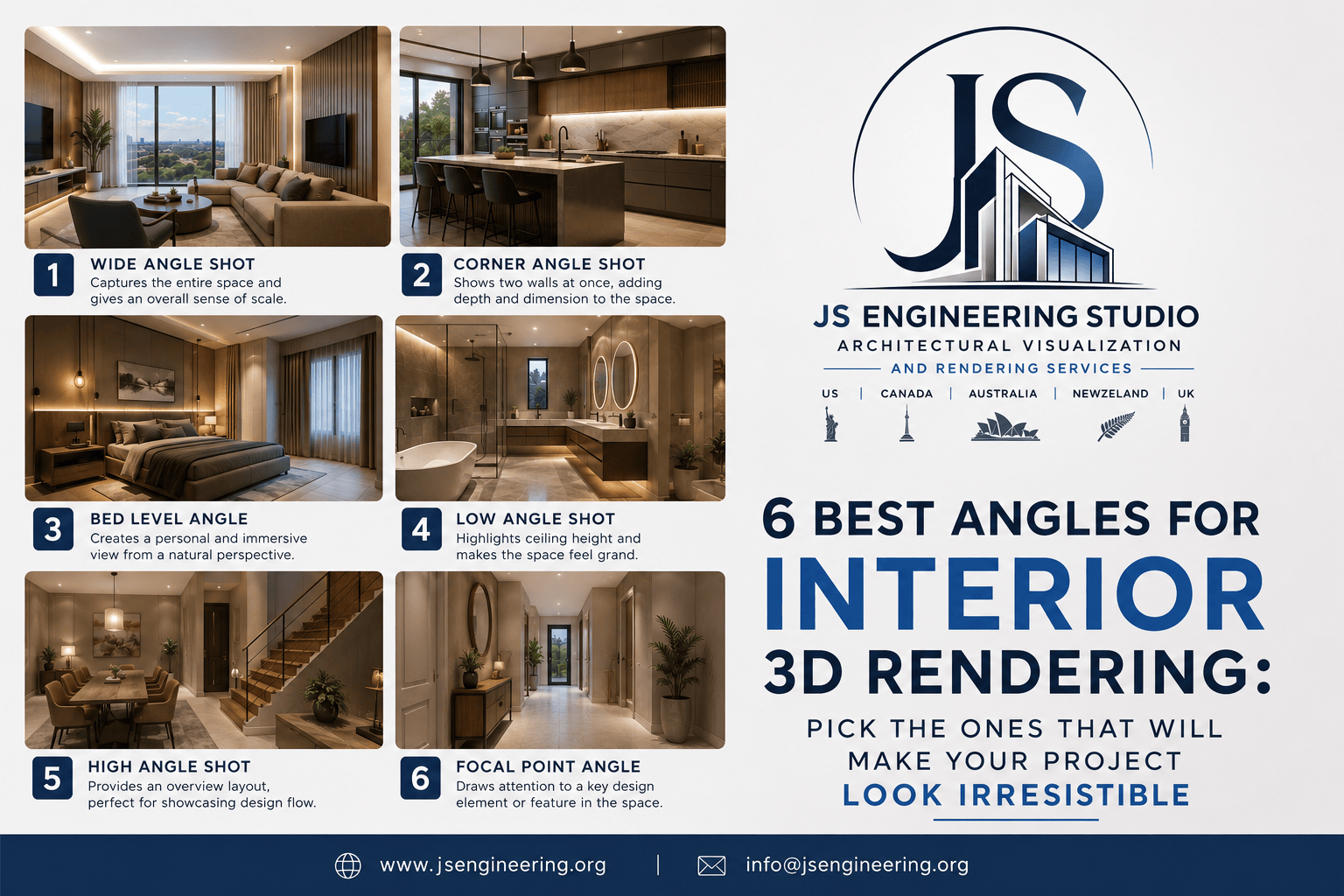
1. Wide Angle Interior Rendering
A wide angle interior rendering is one of the most popular perspectives used in architectural visualization. This angle captures a larger portion of the room, helping viewers understand the overall layout and flow of the space.
Wide-angle views are particularly effective for:
- Living rooms
- Open-concept kitchens
- Hotel lobbies
- Commercial interiors
By showing more of the environment in a single image, this perspective makes rooms appear spacious and inviting. It is commonly used in real estate marketing because it allows potential buyers to visualize the entire space at once.
2. Corner View Interior Rendering
The corner view interior rendering is a professional favorite because it creates a sense of depth and dimension. Positioning the camera in a corner allows two walls to be visible simultaneously, providing a balanced view of the room.
Benefits of a corner view include:
- Better perception of room size
- Enhanced depth and perspective
- Improved furniture presentation
- More natural viewing experience
This angle works exceptionally well in bedrooms, offices, dining areas, and residential interiors where spatial awareness is important.
3. Eye Level Interior Rendering
An eye level interior rendering places the camera at approximately 5 to 6 feet from the floor, mimicking the natural perspective of a standing person.
This angle helps viewers feel physically present within the space. Because it closely resembles human vision, eye-level perspectives create realistic and relatable imagery.
Eye-level renders are ideal for:
- Residential projects
- Interior design presentations
- Hospitality environments
- Virtual property tours
Many professional visualization artists consider this one of the most effective interior rendering camera angles because it feels authentic and comfortable to viewers.
4. Focal Point Interior Rendering
A focal point interior rendering directs attention toward a specific design feature within the room. Instead of showing the entire space, the camera highlights a key architectural element or luxury detail.
Common focal points include:
- Fireplaces
- Designer staircases
- Kitchen islands
- Custom furniture
- Statement lighting fixtures
Using a focal point angle allows designers to emphasize craftsmanship and showcase premium features that differentiate a project from competitors.
At JS Engineering Studio, focal-point renderings are frequently used to create marketing visuals that instantly capture attention and communicate design excellence.
5. Low Angle Interior Rendering
Low-angle shots position the camera below normal eye level and point slightly upward. This technique creates a dramatic perspective that makes ceilings appear taller and spaces feel more luxurious.
Advantages of low-angle rendering:
- Highlights ceiling design
- Enhances architectural details
- Creates a premium appearance
- Adds visual drama
This angle is particularly effective in luxury homes, hotels, commercial buildings, and modern architectural spaces with unique ceiling treatments.
When combined with professional lighting and realistic materials, low-angle renderings can create highly memorable visuals.
6. Symmetrical Interior Rendering
Symmetrical compositions provide a clean, organized, and visually appealing presentation. The camera is aligned directly with the center axis of the room, creating balance and harmony.
This approach is often used for:
- Luxury interiors
- Hotel suites
- High-end kitchens
- Modern minimalist spaces
Symmetry naturally attracts the human eye and creates a sense of sophistication. It is one of the most powerful techniques for producing magazine-quality interior visuals.
Related Post : Best Camera Angles for Architectural Rendering
Why Camera Angles Matter in Interior Rendering
Selecting the right interior rendering camera angles is about more than aesthetics. Camera positioning influences how viewers interpret size, functionality, comfort, and luxury.
The right angle can:
- Make small rooms appear larger
- Highlight architectural details
- Improve buyer engagement
- Increase marketing effectiveness
- Create emotional appeal
Professional visualization studios carefully choose camera positions to tell a story and guide the viewer’s attention.
Why Choose JS Engineering Studio?
At JS Engineering Studio, we combine advanced rendering technology with expert artistic direction to create photorealistic visualizations that help clients market projects more effectively.
Our services include:
- Interior 3D Rendering
- Exterior Architectural Rendering
- Residential Visualization
- Commercial Visualization
- Real Estate Marketing Renderings
- Architectural Animation
Every project is crafted with strategic camera placement, realistic lighting, and attention to detail to maximize visual impact.
Conclusion :
Choosing the best angles for interior 3D rendering can significantly improve the effectiveness of your architectural visualizations. Whether you’re using a wide angle interior rendering, a corner view interior rendering, an eye level interior rendering, or a focal point interior rendering, each perspective serves a unique purpose.
The most successful projects often combine multiple camera angles to tell a complete visual story and showcase every aspect of the design.
If you’re looking for professional architectural visualization services, JS Engineering Studio can help bring your designs to life with stunning, photorealistic renderings that attract attention and drive results.
Request a free Quote on your Architectural Visualization USA for solutions. Contact us ! and email us at info@jsengineering.org.
Frequently Asked Questions (FAQ)
What is the best angle for interior 3D rendering?
Wide-angle and corner-view renderings are generally considered the best options because they showcase more of the room while maintaining a natural perspective.
Why are interior rendering camera angles important?
Camera angles affect how viewers perceive room size, design quality, and functionality. Proper angles make renderings more engaging and realistic.
What is a wide angle interior rendering?
A wide-angle rendering uses a broader field of view to capture more of the room in a single image, making spaces feel open and inviting.
When should I use a corner view interior rendering?
Corner views are ideal when you want to show depth, room dimensions, and furniture layouts in a balanced and visually appealing way.
What is a focal point interior rendering?
A focal-point rendering emphasizes a specific design feature, such as a fireplace, staircase, or luxury kitchen island, to draw attention to key elements.
Which rendering angle is best for luxury interiors?
Symmetrical and low-angle renderings are commonly used for luxury interiors because they create a sophisticated and premium visual presentation.