
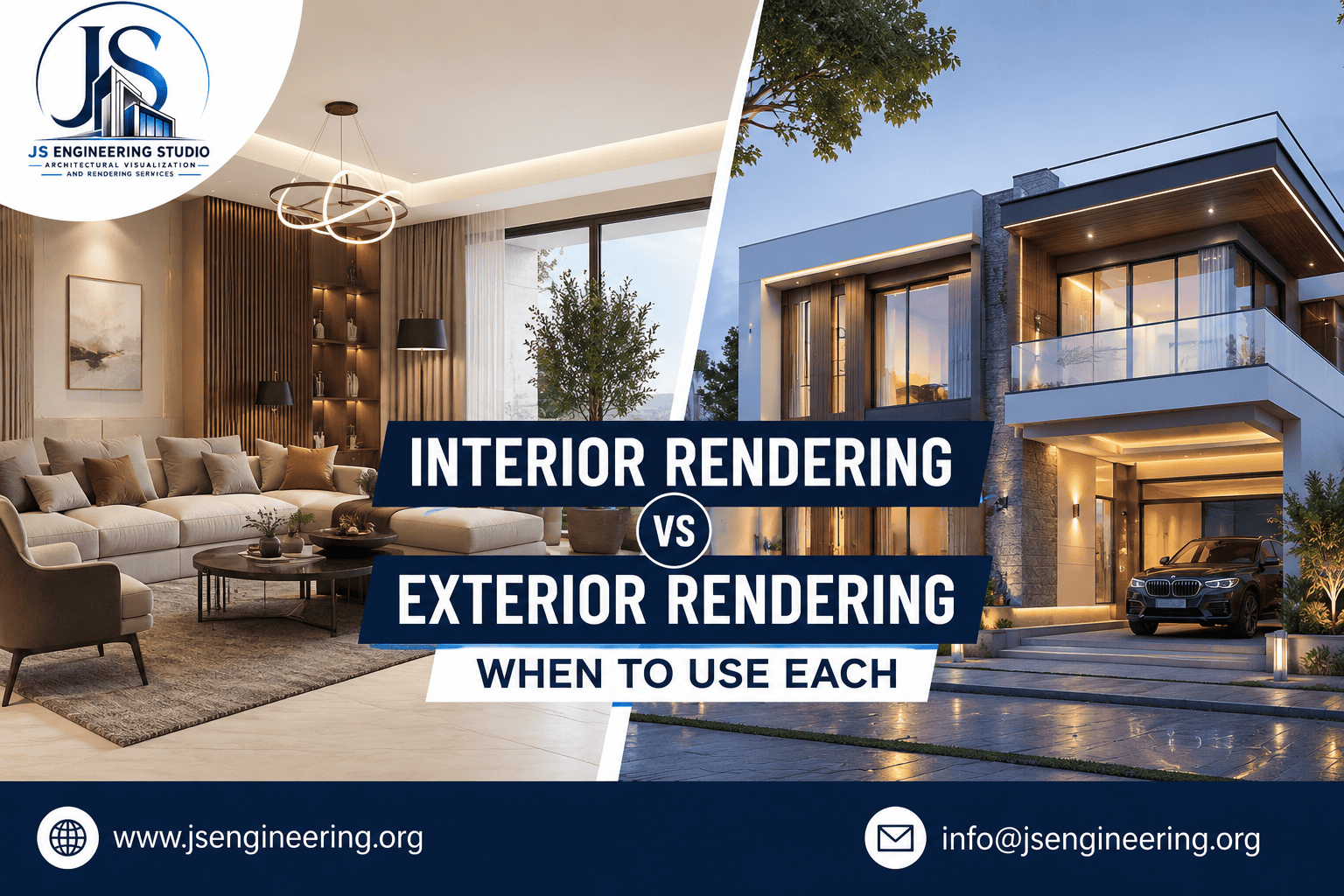
Interior Rendering vs Exterior Rendering: When to Use Each
When pitching a new project or updating a marketing portfolio, a common question arises among developers and designers: Should you invest in exterior rendering vs interior rendering? While both are vital components of modern architectural visualization, they serve completely different purposes, target different emotional triggers, and require distinct technical approaches.
At JS Engineering Studio, we specialize in translating complex architectural blueprints into high-converting digital assets. To help you allocate your marketing and design budget effectively, let’s break down the key differences between these two powerful tools and exactly when to use each for your next project.
The Core Differences: Scope vs. Storytelling
The fundamental division between exterior and interior workflows comes down to what the viewer is supposed to feel and understand.
1. Exterior Rendering: Setting the Scene and Context
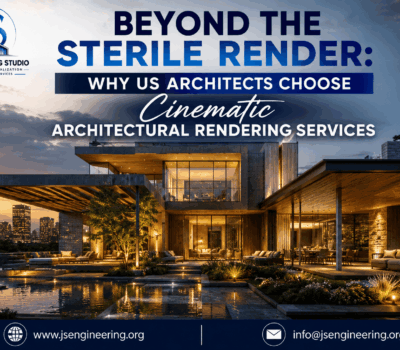
Exterior 3D Rendering Services focuses on the grand scale—the building’s relationship with its environment, its architectural silhouette, and its curb appeal. These visualizations emphasize:
- Environmental Context: How the building interacts with the local landscape, neighboring structures, and changing weather conditions.
- Materiality and Form: The interplay of structural elements, such as mixing natural timber with industrial steel or capturing how sunlight wraps around curved concrete façades.
- Daylight and Shadow: Utilizing massive environmental maps to show a project at golden hour, dusk, or under a bright afternoon sky.
2. Interior Rendering: Crafting an Intimate Experience
Conversely, Interior 3D Rendering Services shift the focus toward human scale, texture, and intimate lifestyle storytelling. Instead of grand architecture, the priority shifts to:
- Tactile Realism: The soft creases in a linen couch, the subtle patina on unlacquered brass fixtures, and the exact grain of custom walnut cabinetry.
- Spatial Flow: Helping a buyer understand the exact layout, ergonomics, and liveability of a space.
- Emotional Connection: Creating a “lived-in” narrative that makes a viewer feel like they are stepping right into the room.
When to Use Exterior Rendering
Exterior rendering is your primary tool for macro-level marketing, capital raising, and public approvals.
- Securing Investor Funding & Zoning Approval: Before you can build, you need city boards and stakeholders to see the vision. An exterior render proves the building fits the community guidelines and enhances the local skyline.
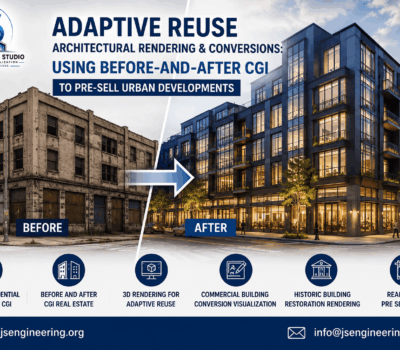
- Pre-Selling Real Estate Developments: For luxury condos or commercial developments, an iconic exterior “hero shot” is what captures attention on billboards, websites, and flyers.
- Showcasing Sustainable and Biophilic Design: If your project features solar passive principles, green roofs, or extensive indoor-outdoor integration, an exterior perspective is crucial to demonstrate how the structure performs in its natural habitat.
When to Use Interior Rendering Services
Once you have captured a prospect’s attention with the building’s façade, you need to close the deal by showing them where they will actually live or work.
- High-End Residential Sales: Buyers don’t fall in love with floor plans; they fall in love with spaces. Utilizing advanced residential rendering techniques allows luxury home buyers to feel the warmth of the primary suite or see the functionality of a custom kitchen.
- Interior Design Client Presentations: For independent designers and architectural firms, an interior render eliminates guesswork, allows for rapid material testing, and secures client sign-off much faster.
- Niche Marketing (e.g., 3D Bedroom Rendering): Highlighting specific intimate spaces—like a sun-drenched master bedroom or a sleek home office—creates highly targeted social media content that stops the scroll.
The Verdict: Which One Do You Need?
Ideally, a complete marketing deck uses both. However, if budget constraints require a choice, prioritize exterior rendering if your main goal is structural approval, grand-scale marketing, or raising initial capital. Choose specialized interior rendering services if you are selling highly customized luxury spaces, targeting end-consumers, or seeking immediate design approvals from private clients.
No matter where your project stands, JS Engineering Studio delivers photorealistic, narrative-driven visuals tailored to the highly competitive US market. Contact us! Get in touch email us at info@jsengineering.org.
FAQ: Real Answers from the Studio Floor
Q: Why do interior renderings sometimes cost more than simple exterior shots?
A: It comes down to poly-counts and asset detail. An exterior render deals with broad geometry and landscape scattering. An interior shot requires hyper-detailed 3D modeling for dozens of individual items—from furniture stitching and light fixtures to specific decor pieces. The level of custom asset curation required for high-end interiors often demands more labor-intensive detail work.
Q: Can you use the same 3D model for both interior and exterior renders?
A: Yes, but with a catch. While the structural walls remain the same, the optimization process is totally different. For an exterior shot, interior assets are heavily simplified or replaced with simple window reflections to save computing power. For an interior shot, the exterior environment is swapped for a high-resolution localized background plate to ensure maximum realism looking out the windows.
Q: What file formats or assets do I need to provide to get started?
A: We work directly with standard US architectural files. You can provide Revit models, AutoCAD DWGs, SketchUp files, or even simple hand-drawn layout concepts along with a material mood board. Our team handles the transition from flat blueprint to fully realized cinematic rendering.