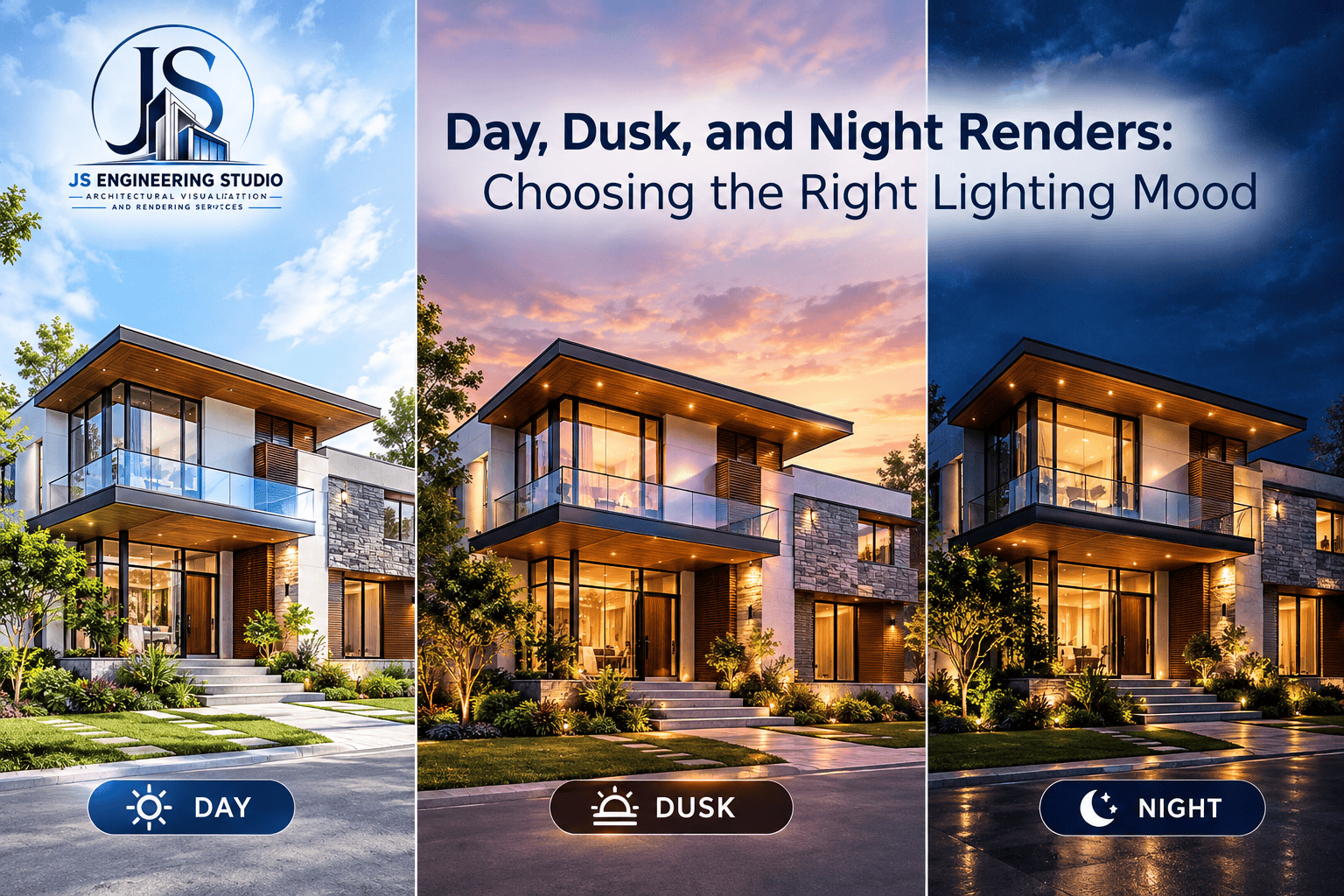
Ask any rendering studio what transforms a good architectural image into a memorable one and the answer usually comes down to lighting. The same building, modeled with the same care, tells three completely different stories when it is rendered in bright daylight, at dusk, or at night. Choosing between them is not a cosmetic decision. The lighting mood you select shapes how buyers, investors, and approval boards feel about the project, and each mood works harder for some building types than others.
This guide explains what each lighting setup does well, when to use it, and how to combine them so a single project gets the visual coverage it deserves.
Why Lighting Mood Matters More Than Most Clients Expect
Architectural Rendering is ultimately about emotion backed by accuracy. A buyer scrolling through listings or a planning commissioner reviewing a proposal responds to atmosphere before they study floor areas or facade materials. Light is the fastest way to set that atmosphere.
Daylight reads as honest, practical, and buildable. Dusk reads as warm, aspirational, and residential. Night reads as premium, dramatic, and urban. None of these is better in absolute terms. The right choice depends on the building, the audience, and the decision the image needs to support.
Daytime Renders: Clarity and Credibility
What they show best
Daylight is the most information-dense lighting condition. Materials read true: brick looks like brick, metal panels show their finish, landscaping is fully legible, and the relationship between the building and its site is obvious. Shadows are crisp and predictable, which helps viewers understand massing, setbacks, and scale.
When to choose them
Day renders are the default for approval submissions, technical marketing, and any context where the viewer needs to evaluate rather than dream. They work especially well for commercial buildings, institutional projects, master plans, and sites where context matters, such as a building that must sit comfortably within an existing streetscape.
Watch out for
Flat midday light can make even a strong design look ordinary. A good studio will angle the sun for modelling shadows, add believable skies, and keep contrast natural rather than washed out. The goal is clarity with life, not a sterile diagram.
Dusk Renders: The Residential Workhorse
What they show best
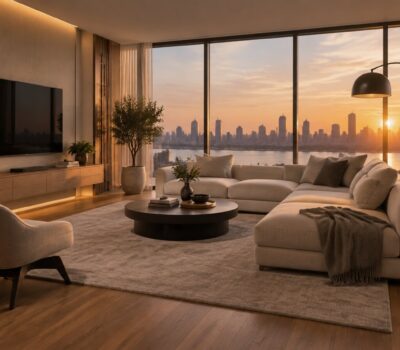
Dusk is the golden window after sunset when the sky still holds deep blue light and interior lighting starts to glow. That combination is uniquely flattering: the architecture keeps its silhouette against a rich sky while warm interior light makes the building feel inhabited and welcoming. Windows stop being dark holes and start telling a story about life inside.
When to choose them
Dusk renders are the strongest single choice for residential marketing: custom homes, condominiums, villas, and hospitality projects. They also suit amenity spaces, clubhouses, and any project where lifestyle is the selling point. If a brochure can carry only one hero image, dusk is usually the safest bet.
Watch out for
Dusk fails when it is overdone. Skies that turn purple-orange everywhere, interior lights that glow like stage lamps, or reflections that ignore physics all push the image into fantasy. Believable dusk is subtle: a gradient sky, restrained interior warmth, and landscape lighting that feels designed rather than decorative.
Night Renders: Drama and Premium Positioning
What they show best
Night rendering strips the scene down to what is lit. Facade lighting, signage, streetscape, and interior spill become the composition. Done well, night images communicate luxury, urbanity, and confidence. They are also the only honest way to show a lighting design that is itself part of the project, which matters for hotels, retail, towers, and cultural buildings.
When to choose them
Choose night renders for high-rise and mixed-use projects, hospitality and entertainment venues, retail fronts, and any design where illumination is a feature. They are also effective as the second or third image in a set, adding drama after daylight has established the facts.
Watch out for
Night images live or die on their blacks. Crushed shadows hide the architecture; lifted shadows look like fog. Balance is everything, and it is one of the clearest signals of a studio’s craft.
How to Combine Moods in One Project Set
Most projects benefit from a small, deliberate mix rather than one mood repeated. A practical set for a residential development might be a daylight aerial for context, a dusk hero at the main entrance, and one night shot of the amenity deck. A commercial project might pair a crisp daytime street view with a night image of the illuminated facade. The set should answer three questions: what is it, what does it feel like, and what makes it special.
Tell your studio early which moods you want. Lighting decisions affect landscaping, entourage, and even camera choice, so adding a dusk version late costs more effort than planning it from the start.
What to Tell Your Studio Before Production
Lighting decisions are cheapest at the briefing stage. Beyond the moods themselves, share the project’s geography and orientation so shadows fall correctly, reference photos of the site at different times of day if you have them, the marketing channels the images will serve, and whether interior scenes should appear furnished and occupied in dusk and night shots. A studio that asks these questions upfront will deliver images that need fewer revision rounds later.
Common Lighting Mistakes That Undermine Good Models
Even strong modeling work suffers when lighting is treated as an afterthought. The problems that show up most often: a sun angle that flattens the facade instead of modelling it, skies swapped in from an obviously different climate or time of day, interior lights left at identical intensity in every window, landscape lighting drawn without any fixture logic, and dusk images where the sky exposure and the building exposure clearly belong to two different photographs. Each of these is fixable, but catching them requires reviewing drafts at full resolution rather than on a phone thumbnail. When you outsource rendering work, build one lighting review pass into your approval workflow before final delivery.
Interior and Exterior Light Should Agree With Each Other
One detail separates professional dusk and night renders from amateur ones: interior light that behaves like interior light. Ceiling fixtures throw a different colour and spread than table lamps, kitchens glow cooler than living rooms, and upper floors are often dimmer than the lobby. When every window burns with the same warm rectangle, viewers may not name the problem, but they feel it. Ask for varied interior scenes behind the glass, with depth visible where the camera angle allows. The extra effort reads as quality even to viewers who cannot explain why.
Frequently Asked Questions
Which lighting mood sells homes fastest?
Dusk renders consistently perform as the emotional favourite for residential marketing because they combine a legible building with warmth and lifestyle cues. Daylight shots should still anchor the set for credibility.
Can one 3D model be rendered in different lighting moods?
Yes. Once the model and materials are built, a studio can light the same scene for day, dusk, or night. Exterior lighting fixtures and interior scenes need to be set up for night work, so mention all the moods you need at the briefing stage.
Are night renders suitable for planning submissions?
They are rarely the primary submission image, since reviewers need to judge massing and materials in clear light. A night view can still be a useful supplement when the project includes a significant lighting design.
How many lighting moods does a typical project need?
Two or three moods cover most needs: daylight for information, dusk for emotion, and night for drama where the design supports it. More than that usually repeats the same message.
The Bottom Line
Lighting mood is a strategic choice, not a filter applied at the end. Daylight builds trust, dusk builds desire, and night builds drama. Match the mood to the building type and the decision your audience needs to make, plan the mix before production starts, and your renders will do far more than decorate a brochure.
Need the right lighting mood for your next project? Contact US JS Engineering Studio for photorealistic architectural rendering services. We are delighted to provide our support! We understand that you may have questions concerning 3D visualization. Please feel free to contact us. email us at info@jsengineering.org. Our response time is within 24 hours on business days.